
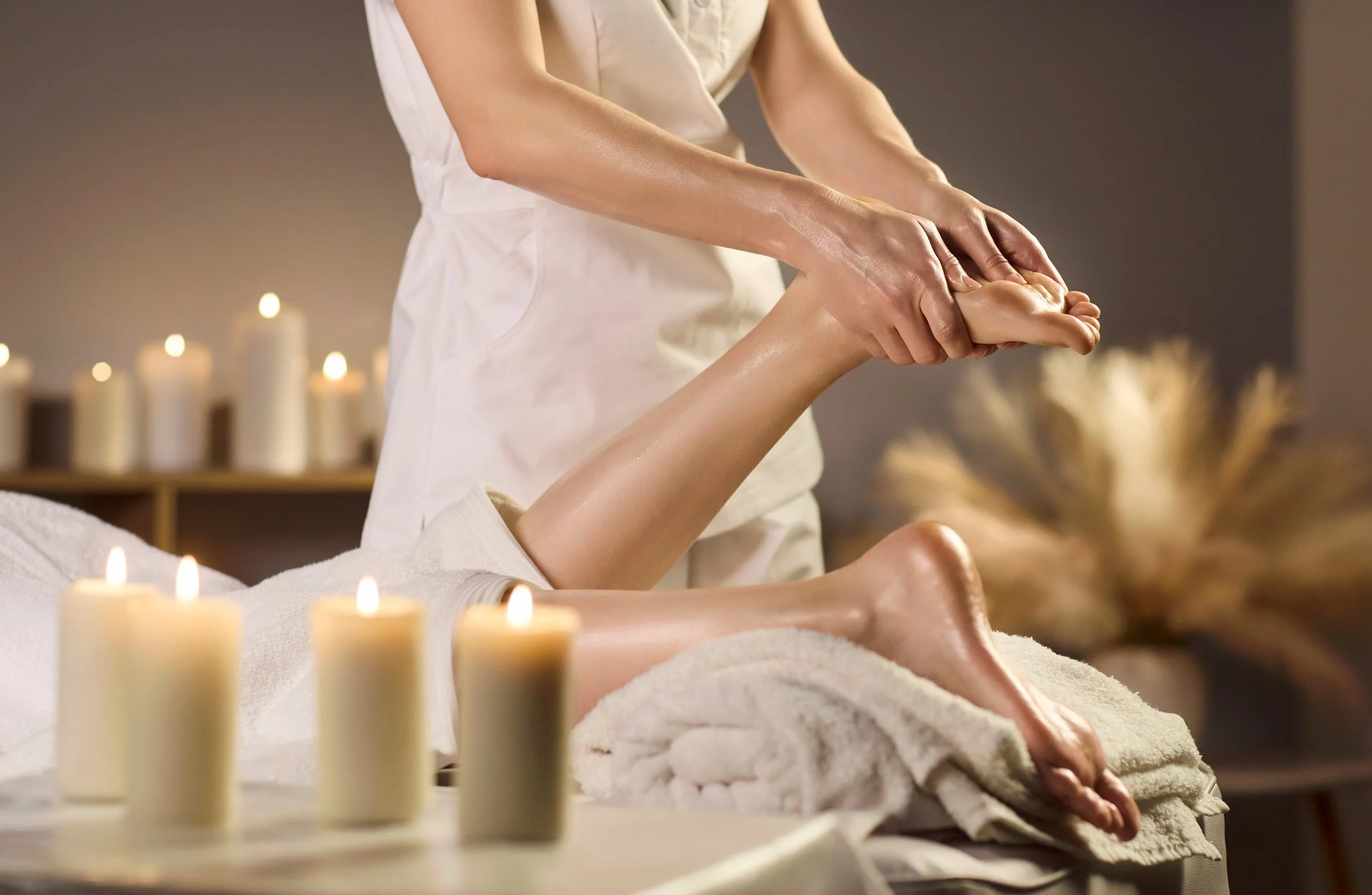
Swollen feet and legs can happen after a long day on your feet, sitting for extended periods, traveling, or simply feeling more fluid retention than usual. For some people, the sensation can be uncomfortable and make shoes or everyday movement feel less comfortable.
If you are looking for foot swelling relief, you may come across reflexology as a complementary wellness practice. Foot reflexology focuses on applying pressure to specific areas of the feet and may be used to encourage relaxation and overall well-being.
However, swelling can have many different causes. Reflexology should not be used to diagnose or treat the underlying cause of persistent or unexplained swelling.
What Causes Swollen Feet and Legs?
Swelling occurs when excess fluid builds up in body tissues. Temporary swelling may happen after standing or sitting for a long time, during travel, or after certain lifestyle changes.
Other causes can include:
Injury or inflammation
Certain medications
Vein-related circulation problems
Pregnancy
Heart, kidney, or liver conditions
Lymphatic system problems
Because the causes vary, it is important to pay attention to how long the swelling lasts and whether other symptoms appear.
If swelling is sudden, severe, occurs mainly in one leg, or comes with pain, redness, warmth, chest pain, or difficulty breathing, seek medical attention rather than relying on a wellness treatment.
What Is Foot Reflexology?
Foot reflexology is a complementary practice based on applying pressure to specific areas of the feet.
A reflexology session typically involves the practitioner working with different areas of the feet using controlled pressure and massage-like movements.
People often seek reflexology as a way to relax and take time away from daily stress. Some also explore it when they experience feelings of heaviness or discomfort in their feet and legs.
It is important to distinguish reflexology from medical treatment. Reflexology does not replace evaluation or treatment for conditions that cause swelling.
Can Reflexology Help With Foot Swelling?
People interested in reflexology for swollen feet often want to know whether it can actually reduce swelling.
There is limited evidence to support reflexology as a treatment for edema or the medical conditions that cause swelling. However, a reflexology session may provide a relaxing experience and may help you become more aware of sensations in your feet.
For someone looking for foot swelling relief, reflexology can therefore be considered a complementary wellness option rather than a treatment for the cause of swelling.
If swelling continues or keeps returning, identifying the reason behind it is more important than simply managing the sensation.
Reflexology and Circulation
Another common reason people explore reflexology is circulation.
Searches for reflexology for circulation often come from people who experience cold feet, tired legs, or a feeling of heaviness after sitting or standing for long periods.
Reflexology involves massage and pressure to the feet, which can feel soothing and relaxing. However, it should not be described as a way to correct poor blood circulation or a vascular condition.
For persistent circulation concerns, a healthcare professional can help determine whether there is an underlying issue that needs attention.
Can Reflexology Help With Fluid Retention?
Fluid retention can contribute to swollen feet, ankles, and legs.
Some people search for reflexology for fluid retention because they want a gentle wellness approach. While reflexology may feel relaxing, there is not enough evidence to say that it removes excess fluid or treats the cause of edema.
The lymphatic system plays an important role in maintaining fluid balance in the body. However, reflexology should not be confused with manual lymphatic drainage, which is a specific hands-on technique used for particular medical and post-treatment needs.
Understanding the difference is especially important when looking for support for lymphatic circulation.
What About Leg Swelling Relief?
If your legs feel heavy or uncomfortable after a long day, gentle foot-based wellness practices may feel soothing.
For leg swelling relief, however, it is useful to look at the bigger picture.
Simple habits such as changing position regularly, taking short walks, avoiding prolonged sitting or standing, and elevating the legs when appropriate may help with occasional swelling.
If swelling does not improve, keeps returning, or is accompanied by other symptoms, speak with a healthcare professional.
What to Expect From Foot Reflexology
A reflexology session is generally centered around the feet and can be performed while you are comfortably seated or lying down.
Your practitioner may ask about your wellness goals and any areas of discomfort before beginning.
During the session, pressure is applied to different areas of the feet using the hands and fingers. Some areas may feel more sensitive than others.
The goal is not to diagnose the reason for your swelling. Instead, reflexology provides a focused wellness experience that may help you slow down and relax.
Is Reflexology for Poor Circulation Right for You?
People searching for reflexology for poor circulation should first consider why they are experiencing circulation-related symptoms.
Occasional tired or uncomfortable feet may have a simple explanation. Persistent swelling, significant changes in skin color or temperature, numbness, pain, or one-sided swelling can require medical evaluation.
If a healthcare professional has already evaluated your symptoms and you are looking for a complementary wellness practice, reflexology may be something you can discuss with your practitioner.
When Should Swollen Feet Be Checked?
Not all swelling is harmless.
Seek prompt medical attention if swelling:
Appears suddenly
Occurs mainly in one leg
Is accompanied by significant pain
Comes with redness or warmth
Develops after an injury
Occurs with shortness of breath or chest pain
Continues without an obvious reason
These symptoms can sometimes point to an underlying medical problem that requires proper evaluation.
Reflexology can be part of a wellness routine, but it should not delay medical care.
Frequently Asked Questions
Can reflexology reduce foot swelling?
There is not enough evidence to establish reflexology as a treatment for swelling or edema. It may provide relaxation and comfort, but persistent swelling should be evaluated to determine its cause.
Is foot reflexology good for circulation?
Foot reflexology can feel relaxing, but it should not be considered a treatment for poor blood circulation or vascular conditions. Persistent circulation concerns should be discussed with a healthcare professional.
Can reflexology help with fluid retention?
There is limited evidence that reflexology directly reduces fluid retention. If swelling is persistent or unexplained, it is important to identify the underlying cause.
What is the difference between reflexology and lymphatic drainage?
Reflexology focuses primarily on applying pressure to areas of the feet. Manual lymphatic drainage is a specialized technique involving gentle, specific movements intended to support lymph fluid movement.
When should I see a doctor about swollen feet?
Sudden, severe, one-sided, painful, or unexplained swelling should be medically evaluated. Swelling accompanied by chest pain or difficulty breathing requires urgent medical attention.
Support Your Feet With a Thoughtful Wellness Routine
Occasional foot discomfort can be a reminder to slow down and give your body some attention.
If you are looking for a complementary approach to relaxation and foot wellness, reflexology can be one option to consider.
Explore reflexology at RHOW and make time for your well-being.